
Utility Room Ideas
Utility rooms are among the hardest-working spaces in the house.
From laundry and storage to pet care and household organisation, a well-designed utility room can make everyday life dramatically easier. The best utility rooms combine practical thinking with clever design, helping to reduce clutter, improve efficiency, and create a calm, organised environment.
Whether you have a spacious dedicated room or a compact cupboard tucked beside the kitchen, these utility room ideas will help you make the most of every inch.
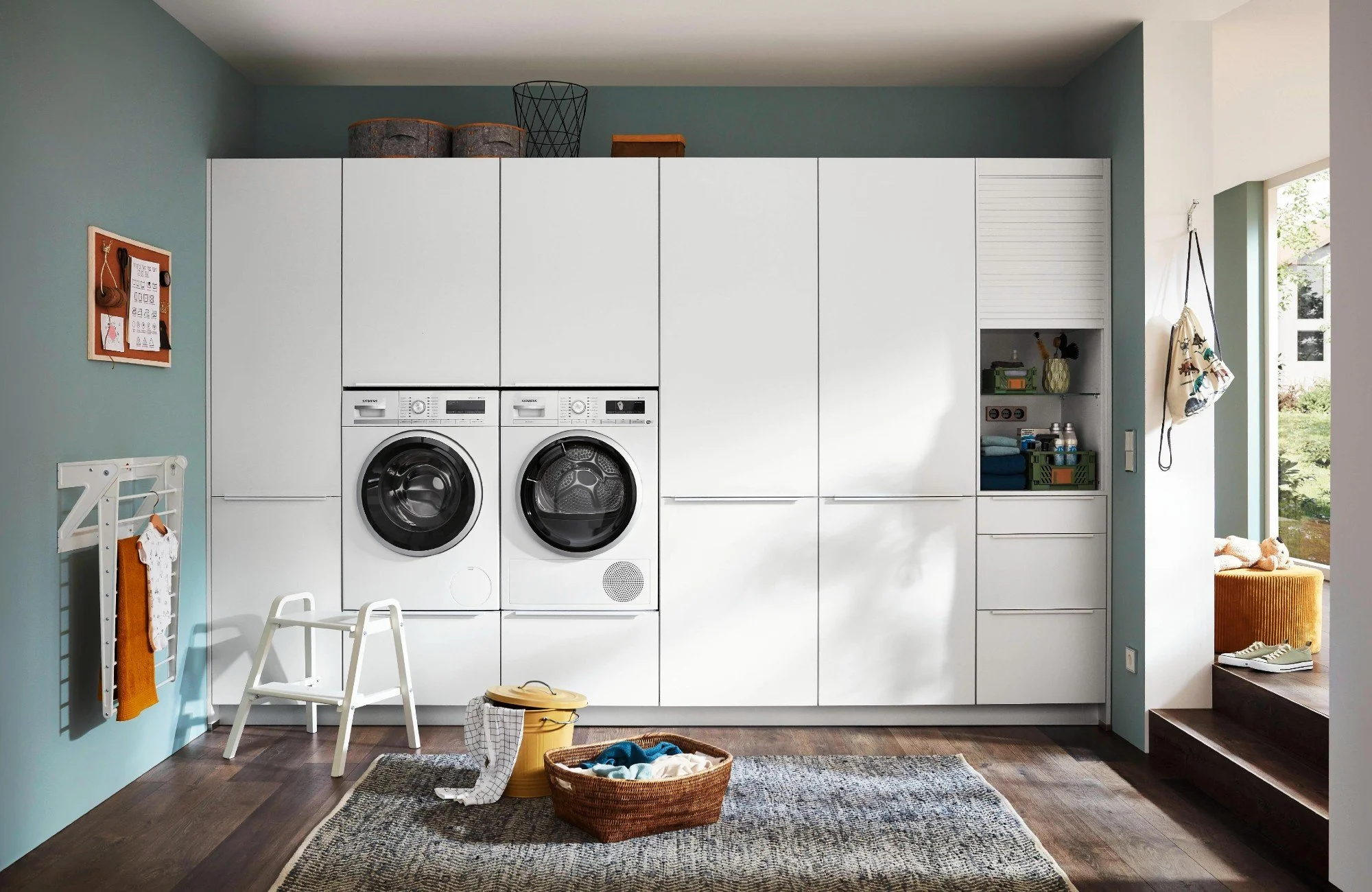
Why Utility Rooms Matter More Than Ever
Modern homes are expected to work harder than ever before. Open-plan living has made kitchens more social, but it has also made noise, clutter, and appliances more visible.
A utility room creates separation.
It gives you somewhere to:
hide laundry and cleaning supplies, store bulky appliances, reduce noise from washing machines and tumble dryers, organise coats, shoes, pet accessories, and recycling, and keep the kitchen calmer and more streamlined.
For busy families, especially, a utility room quickly becomes an everyday essential rather than a luxury.
1. Choose Tall Storage to Maximise Space
One of the simplest ways to improve a utility room is by using the full height of the room.
Tall cabinetry creates significantly more storage than standard base units alone and helps keep surfaces clear.
Consider including floor-to-ceiling pantry cupboards, pull-out cleaning storage, integrated laundry baskets, hidden shelving for detergents and household supplies, and vertical broom cupboards.
If space is limited, even one tall cabinet can completely transform how organised the room feels.
Light-coloured cabinetry can also help smaller utility rooms feel more open and airy.
2. Stack Appliances to Save Floor Space
Stacking your washing machine and tumble dryer is one of the most effective ways to free up valuable space.
This layout creates additional space for extra cabinetry, a sink area, folding space, open shelving, and pull-out ironing boards.
Integrated appliance housing also creates a cleaner, more premium look.
If you are planning a stacked arrangement, ensure ventilation and accessibility are considered from the start.
3. Add a Practical Utility Sink
A utility sink is one of the most useful additions you can make.
Unlike a kitchen sink, a utility sink is designed for the messier parts of daily life.
It is ideal for handwashing delicate items, cleaning muddy boots, washing pets, filling mop buckets, gardening clean-up, and stain removal before laundry.
Deep ceramic or stainless steel sinks are especially popular because they are durable and easy to clean.
Pair the sink with a high-quality pull-out tap for even greater flexibility.
4. Create a Boot Room Combination
Many homeowners are now combining utility rooms with boot room functionality.
This works particularly well in family homes, countryside properties, or homes with pets.
A combined utility and boot room can include bench seating, coat hooks, shoe storage, open cubbies, pet feeding stations, and laundry facilities.
This approach helps stop dirt and clutter from reaching the main living areas.
It also creates a much more organised entrance into the home.
5. Use Smart Storage Accessories
The most efficient utility rooms are carefully planned internally as well as externally.
Storage accessories can dramatically improve organisation.
Popular options include pull-out laundry baskets, internal drawer dividers, sliding shelves, hidden ironing boards, wall-mounted drying racks, pull-out recycling bins, and peg rails for hanging clothes.
Small details often make the biggest difference in daily use.
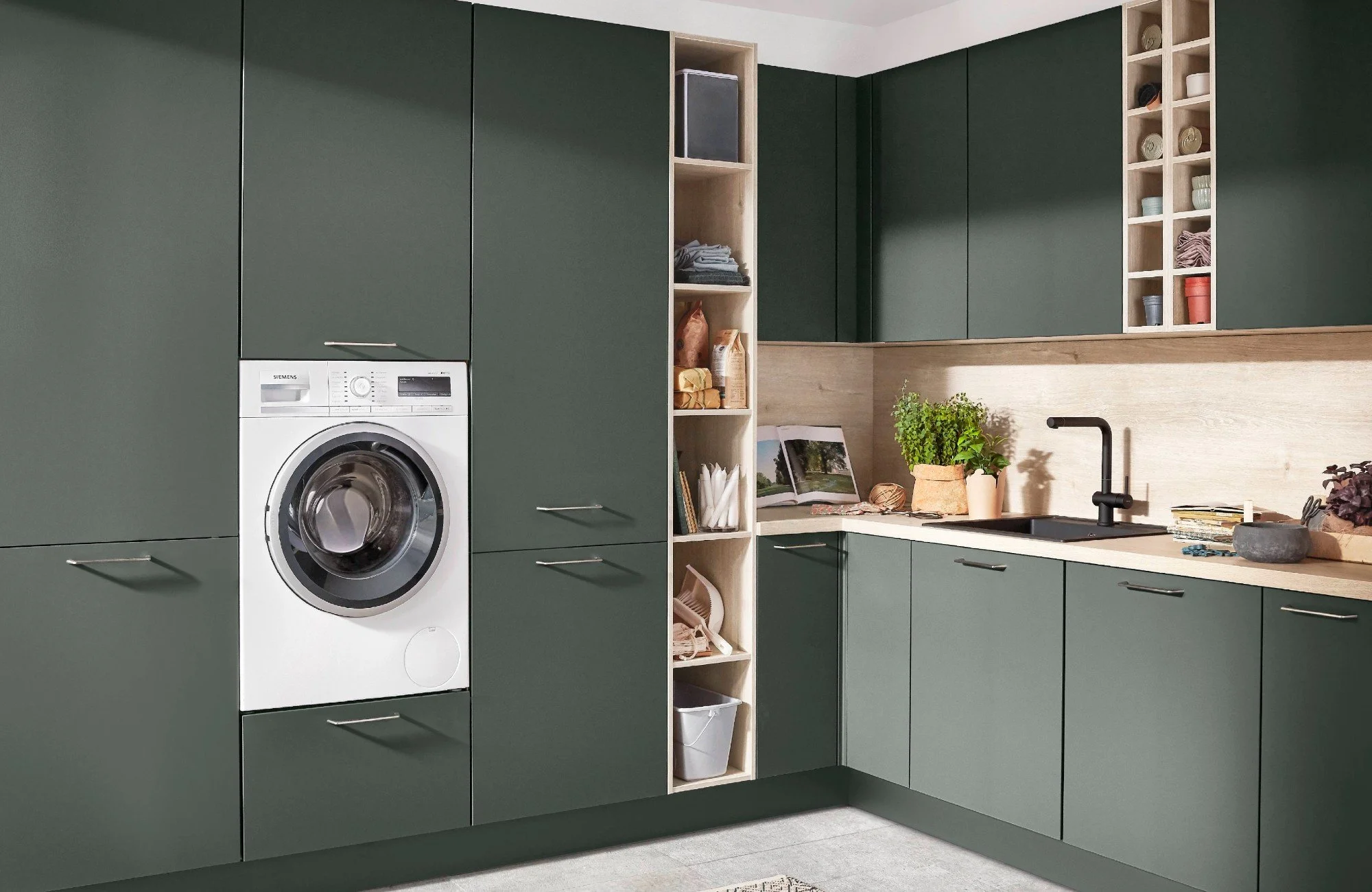
6. Incorporate Hidden Drying Solutions
Drying clothes indoors can quickly make a room feel cluttered.
Hidden drying systems help maintain a cleaner appearance while improving practicality.
Popular solutions include ceiling-mounted drying racks, pull-out drying rails, heated drying cupboards, and fold-away wall racks.
These options are especially useful during colder months when outdoor drying is less practical.
7. Plan Your Layout Around Workflow
One of the biggest mistakes in utility room design is focusing only on appearance.
Functionality should always come first.
Think about how you actually use the space.
For example:
Laundry enters the room
Clothes are washed
Clothes are dried
Laundry is folded
Items are stored or returned upstairs
Planning the layout around this natural workflow can significantly improve efficiency.
Try to minimise unnecessary movement between appliances, sinks, and storage.
8. Hide Clutter Behind Pocket or Bi-Fold Doors
If your utility space is connected to the kitchen, hiding it behind doors can help maintain a cleaner overall appearance.
Pocket doors and bi-fold doors are particularly effective because they:
Save space
Reduce visual clutter
Hide noise and appliances
Create a cleaner kitchen aesthetic
This approach is especially popular in modern open-plan homes.
9. Consider Pet-Friendly Features
For pet owners, the utility room can become the perfect pet-care zone.
Useful additions include built-in pet beds, feeding stations, towel storage, pet washing areas, hidden litter trays, and durable flooring.
This helps keep muddy paws and pet accessories contained in one practical area.
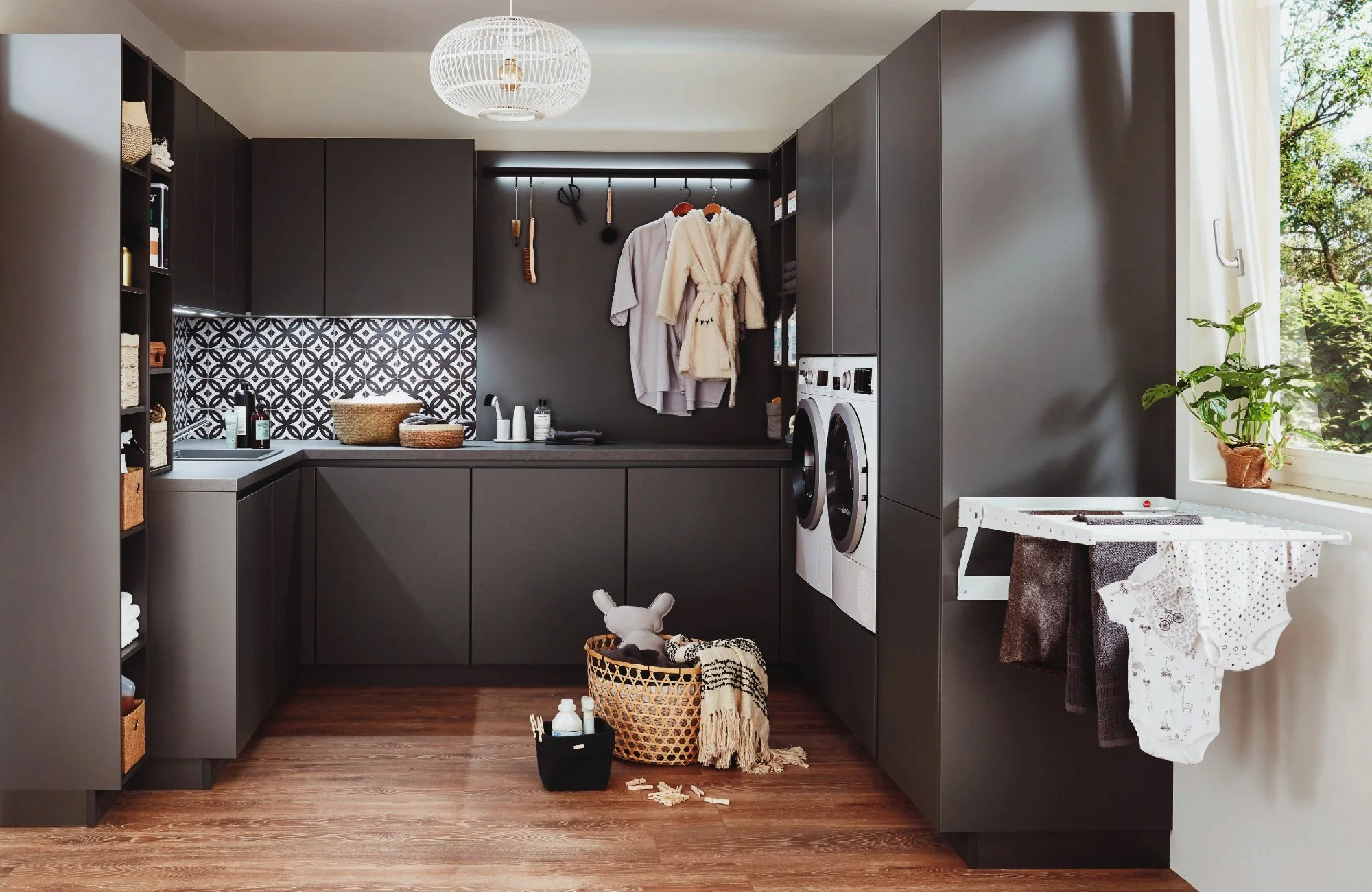
Utility Room Design Trends for 2026
Utility rooms are becoming more sophisticated and design-led.
Current trends include seamless cabinetry that matches the kitchen, dark, dramatic colour palettes, smart storage systems, energy-efficient appliances, integrated pet-care zones, minimalist handleless designs, and natural textures with warm neutrals.
Rather than hiding the utility room away completely, homeowners are increasingly designing these spaces to feel cohesive with the rest of the home.
A well-designed utility room can completely change how your home functions day to day.